Hop Harvest Spring Season Sublimation Review
As a designer who spends more time staring at stitch maps than most people care to admit, I approach every new machine embroidery design with a mix of excitement and skepticism. We have all been there: you download a file that looks vibrant on the screen, only to find it turns into a puckered mess or a thread-breaking nightmare once it hits the fabric. That is why I took a close look at the Hop Harvest Spring Season Sublimation graphic, not just as a digital asset, but as a potential candidate for real-world stitching. While the product listing categorizes this under T-Shirt Designs and Graphics, my mind immediately went to how this illustration could translate into a tangible, stitched finished product for a client.
First Impressions: Mood and Visual Personality
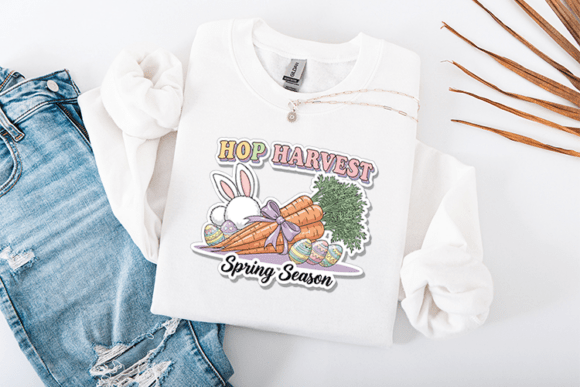
The first thing that strikes me about the Hop Harvest Spring Season Sublimation is its undeniable charm. The central motif—a large bundle of fresh garden carrots tied with a lavender bow—evokes a sense of rustic abundance and gentle celebration. It feels organic, grounded, and perfectly suited for the spring season. From a layout perspective, the composition is balanced. The verticality of the carrot bundle provides a strong focal point, while the lavender bow adds a soft, decorative accent that breaks up the earthy tones of the vegetables.
For an embroidery project, this visual personality suggests a design that would work beautifully on home goods or boutique apparel. The "harvest" theme isn't just limited to autumn; here, it speaks to the early spring harvest of root vegetables, making it versatile for Easter baskets, farmer's market tote bags, or even kitchen decor. The level of detail in the illustration appears moderate, which is often the sweet spot for embroidery. It offers enough texture to be interesting without demanding impossibly tiny stitches that compromise durability.
Real-World Application: A Case Study
To truly evaluate this design, I imagined a specific scenario: a local boutique owner preparing for a spring craft fair. She needs a signature item that stands out on a crowded table. She decides on a natural canvas tote bag design featuring the Hop Harvest motif. In this context, the Hop Harvest Spring Season Sublimation shines. The earthy oranges of the carrots contrast beautifully against the neutral background of unbleached canvas.
If I were digitizing this or adapting it for a sweatshirt embroidery project, I would envision using a combination of fill stitch for the body of the carrots to give them weight and texture, and a crisp satin stitch for the lavender bow to make it pop. The result would be a handmade product that feels premium. Customers are drawn to items that tell a story, and this design whispers of garden-fresh goodness and handmade care. It is exactly the kind of imagery that converts browsers into buyers at a weekend market.
Beyond tote bags, this graphic could easily transition into a cozy baby embroidery project. Imagine a bib or a onesie featuring a smaller version of the carrot bundle. The soft colors and friendly subject matter make it an ideal personalized gift for a baby shower. However, because the original asset is a sublimation design intended for T-Shirt Designs, one must be careful about scaling. What looks perfect on a full-size tee might need significant simplification to work on a small baby garment without losing clarity.
Technical Considerations and Fabric Challenges
While the aesthetic appeal is high, practical execution requires caution. When moving from a digital graphic to a physical stitch-out, several factors come into play. First, consider the fabric texture. This design would struggle on highly textured fabrics like thick bouclé or loose-weave linens unless properly stabilized. The fine details of the carrot tops and the bow's ribbon edges require a smooth surface to maintain definition.
Secondly, think about stitch density. If you are adapting this sublimation art into an embroidery file, you must avoid over-saturating the carrot areas with thread. Too much density on a stretchy fabric, like a jersey knit tee, will cause the design to pucker and the garment to warp. For custom apparel, testing on scrap fabric of the same weight is non-negotiable. You need to see how the threads interact with the material before committing to a client's order.
There are also specific zones where the design demands attention. The junction where the lavender bow ties around the carrots is a potential trouble spot. In embroidery, tight corners and overlapping elements can lead to thread breaks or messy backs if not programmed correctly. If you are using this for an embroidered patch, ensure the border is robust enough to hold the internal details together during cutting and sewing. Furthermore, if applying this to dark fabrics, remember that sublimation designs often rely on the background color being part of the image. In embroidery, you may need to add a light-colored underlay or adjust the thread colors to ensure the carrots don't get lost against a navy or black background.
Where to Use With Care
- Small Hoop Sizes: The intricate details of the bundle may lose definition if scaled down too far for a 4x4 hoop.
- Stretchy Fabrics: High stitch counts on knits require excellent stabilizer choices to prevent distortion.
- Curved Surfaces: Stitching this on a cap requires careful positioning to avoid the design wrapping awkwardly around the curve.
- Frequent Washing: Ensure the satin stitch borders are dense enough to withstand repeated laundering without fraying.
Enhancing Brand Value and Customer Trust
For an Etsy seller or small shop owner, the choice of design directly impacts brand perception. Using a high-quality, cohesive image like Hop Harvest Spring Season Sublimation signals professionalism. It shows that you care about the themes you present and the quality of your small shop product. When a customer receives a pillow cover or apron with clear, well-executed stitching based on this design, it builds trust. They are more likely to return for future holiday embroidery needs or recommend your store to friends.
The visual appeal of this design also aids in marketing. It photographs well for printable mockups and social media previews. The bright orange and soft purple create a color palette that is eye-catching in a feed full of muted pastels. This recognition factor is crucial for commercial embroidery businesses trying to stand out in a saturated market.
Final Designer Notes and Recommendations
Before diving into production with Hop Harvest Spring Season Sublimation, here are my top recommendations for fellow makers:
- Test First: Always stitch a sample on scrap fabric identical to your final material. Check for puckering and thread tension.
- Check Contrast: Verify that your chosen thread colors match the vibrancy of the original sublimation art. You may need to swap standard orange for a variegated thread to add depth.
- Review Density: If digitizing this yourself, pay close attention to the stitch density in the carrot bodies to keep the fabric flexible.
- Confirm Licensing: Since this is sold as a graphic/sublimation design, explicitly check the license terms before selling finished embroidered items. Some assets are for personal use only, while others allow commercial embroidery.
- Stabilizer Matters: Don't skimp on stabilizer. A cut-away stabilizer is often best for garments that will be washed frequently, ensuring the design stays crisp.
In conclusion, the Hop Harvest Spring Season Sublimation is a delightful asset with strong potential for translation into embroidery. It brings a warm, seasonal mood to any project, from kitchen towels to boutique tees. With careful attention to technical details and fabric selection, it can become a staple in your spring collection, delighting customers with its charm and craftsmanship.